
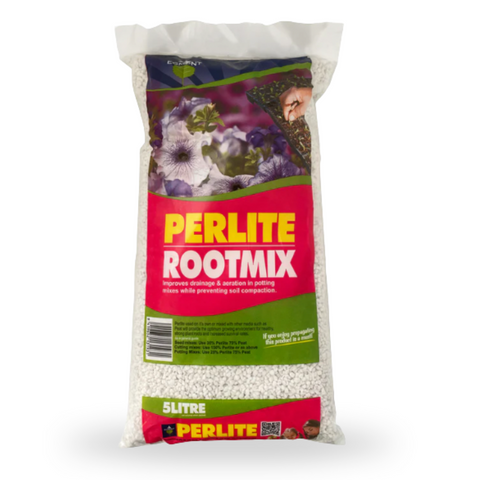
v Perlite Medium Grade (2mm to 4mm) 5 Litre Bag – growshop.co.nz
Perlite Medium Grade (2mm to 4mm) 5 Litre Bag

Perlite Medium Grade (2mm to 4mm) 5 Litre Bag

  • $13.00


Characteristics of Perlite

Non-combustible, perlite is essentially expanded glass that is retrieved from areas where a volcano has been active. Perlite is initially quarried, crushed, and then fractionated or divided up into its various parts: those that will be capable of being expanded into useful perlite, and those that are not. The useful form of the product will have a typical grain size between 0.14 and three millimeters. These particles will later be expanded at high heat to give the final product its airy texture.

Perlite is non-fibrous, which makes it safe for use. However, it can contain perlite dust particles, so it is best to work with it moist to prevent the inhalation of these particles.

Nutrient-rich water is attracted to the small crevices in the perlite particles, and this capillary feature is why it can also provide moisture to your plants as well as aide in providing oxygen.

When is it Best to Use Perlite in the Garden?

Whether to use perlite or not greatly depends on what type of grow system is being used. Regular soil is an obvious candidate as it is quite heavy and can become compacted. Some organics like peat moss or coco mulch can and will also compact.

Additional Tips for Using Perlite in Your Grow Medium

Though it is not a synthetic material, perlite can have a detrimental effect on the local ecological environment because it is strip mined. So, when buying perlite, it is worth researching the various firms that mine it and learn how they implement the maintenance of soil composition and ecology, and what steps they take to restore the environment. When done properly, there is no need to leave the landscape damaged after the mining process is finished.

As perlite does not hold much more than one per cent moisture, it is usually best used in conjunction with other materials. Vermiculite is a popular companion to perlite as it does hold considerably more water. In fact, vermiculite will hold from between 30 and 50 per cent of its volume in water, and 200 to 300 per cent of its weight.

When mixed 50/50 with perlite, it will do an excellent job of providing much-needed media porosity and air, as well as help to sustain plants from drought. If mixing perlite or vermiculite with peat moss, a combined ratio of between 25 and 35 per cent by volume is best.

The ability of perlite to improve aeration while it aids in providing water makes it an excellent product for many hydroponic applications. Perlite is a naturally occurring inorganic, chemically inert, and sterile product, so it does not represent a threat by adding unwanted biologics or pests into your system.

It is also an insulator so it can effectively reduce relatively high ambient air temperatures from transferring into the soil or media when used as a surface or lining product.

The question of whether to use perlite or not will first be decided by the type of system you are using. Some systems will not work well with it—mostly because it floats. Otherwise, this beneficial natural material can help to maintain a healthy root system by assuring that the soil or grow media stays porous and provides oxygen for root respiration.

Healthy roots mean greater yield and better-tasting crops. Any time you notice your grow media is becoming hard or compacted and seems to drain more slowly, you may want to incorporate some perlite into the mix. 

This happens over time as the soil or media is watered; each particle gets closer to the others and air pores are shrunk or eliminated. When this happens, water will not drain through the grow media very well and air will not easily penetrate. The grower will likely notice a decrease in plant vigor and production, though they may not be aware of the cause.

Roots also may fail to expand or grow, and they may contract various diseases due to a lack of oxygen and overabundance of moisture. Moss can grow on the medium’s surface if it remains wet most of the time.

Perlite makes a positive contribution towards resolving these issues when used in the proper ratio. If your grow pots are sheltered from wind, perlite placed on the surface of the grow media will wick away moisture from the surface and reduce or eliminate mold and moss.

Perlite, however, is lightweight, which makes it problematic for grow systems where it might float. Deep water culture is an obvious one. With ebb and flow, the perlite particles may slowly travel towards the surface of grow pots, causing uneven distribution within the pot.

Any grow system where flooding is a part of normal operations may not be appropriate for using perlite.

{"id":10261133005,"title":"Perlite Medium Grade (2mm to 4mm) 5 Litre Bag","handle":"perlitemediumgrade5litrebag","description":"\u003ch2\u003eCharacteristics of Perlite\u003c\/h2\u003e\n\u003cp\u003eNon-combustible, perlite is essentially expanded glass that is retrieved from areas where a volcano has been active. Perlite is initially quarried, crushed, and then fractionated or divided up into its various parts: those that will be capable of being expanded into useful perlite, and those that are not. The useful form of the product will have a typical grain size between 0.14 and three millimeters. These particles will later be expanded at high heat to give the final product its airy texture.\u003c\/p\u003e\n\u003cp\u003ePerlite is non-fibrous, which makes it safe for use. However, it can contain perlite dust particles, so it is best to work with it moist to prevent the inhalation of these particles.\u003c\/p\u003e\n\u003cp\u003eNutrient-rich water is attracted to the small crevices in the perlite particles, and this capillary feature is why it can also provide moisture to your plants as well as aide in providing oxygen.\u003c\/p\u003e\n\u003cp\u003e\u003cstrong\u003eWhen is it Best to Use Perlite in the Garden?\u003c\/strong\u003e\u003c\/p\u003e\n\u003cp\u003eWhether to use perlite or not greatly depends on what type of grow system is being used. Regular soil is an obvious candidate as it is quite heavy and can become compacted. Some organics like \u003ca href=\"https:\/\/www.maximumyield.com\/definition\/89\/peat-moss\"\u003epeat moss\u003c\/a\u003e or \u003ca href=\"https:\/\/www.maximumyield.com\/crazy-for-coco-coir\/2\/1237\"\u003ecoco mulch\u003c\/a\u003e can and will also compact.\u003c\/p\u003e\n\u003cp\u003e\u003cstrong\u003eAdditional Tips for Using Perlite in Your Grow Medium\u003c\/strong\u003e\u003c\/p\u003e\n\u003cp\u003eThough it is not a synthetic material, perlite can have a detrimental effect on the local ecological environment because it is strip mined. So, when buying perlite, it is worth researching the various firms that mine it and learn how they implement the maintenance of soil composition and ecology, and what steps they take to restore the environment. When done properly, there is no need to leave the landscape damaged after the mining process is finished.\u003c\/p\u003e\n\u003cp\u003eAs perlite does not hold much more than one per cent moisture, it is usually best used in conjunction with other materials. \u003ca href=\"https:\/\/www.maximumyield.com\/definition\/134\/vermiculite\"\u003eVermiculite\u003c\/a\u003e is a popular companion to perlite as it does hold considerably more water. In fact, vermiculite will hold from between 30 and 50 per cent of its volume in water, and 200 to 300 per cent of its weight.\u003c\/p\u003e\n\u003cp\u003eWhen mixed 50\/50 with perlite, it will do an excellent job of providing much-needed media porosity and air, as well as help to sustain plants from drought. If mixing perlite or vermiculite with peat moss, a combined ratio of between 25 and 35 per cent by volume is best.\u003c\/p\u003e\n\u003cp\u003eThe ability of perlite to \u003ca href=\"https:\/\/www.maximumyield.com\/definition\/136\/aeration\"\u003eimprove aeration\u003c\/a\u003e while it aids in providing water makes it an excellent product for many \u003ca href=\"https:\/\/www.maximumyield.com\/definition\/70\/hydroponics\"\u003ehydroponic applications\u003c\/a\u003e. Perlite is a naturally occurring inorganic, chemically inert, and sterile product, so it does not represent a threat by adding unwanted biologics or pests into your system.\u003c\/p\u003e\n\u003cp\u003eIt is also an insulator so it can effectively reduce relatively high ambient air temperatures from transferring into the soil or media when used as a surface or lining product.\u003c\/p\u003e\n\u003cp\u003eThe question of whether to use perlite or not will first be decided by the type of system you are using. Some systems will not work well with it—mostly because it floats. Otherwise, this beneficial natural material can help to maintain a healthy root system by assuring that the soil or \u003ca href=\"https:\/\/www.maximumyield.com\/definition\/2085\/growing-media\"\u003egrow media\u003c\/a\u003e stays porous and provides oxygen for \u003ca href=\"https:\/\/www.maximumyield.com\/maintaining-healthy-hydroponic-root-systems\/2\/1403\"\u003eroot respiration\u003c\/a\u003e.\u003c\/p\u003e\n\u003cp\u003eHealthy roots mean greater yield and better-tasting crops. Any time you notice your grow media is becoming hard or compacted and seems to drain more slowly, you may want to incorporate some perlite into the mix. \u003c\/p\u003e\n\u003cp\u003eThis happens over time as the soil or media is watered; each particle gets closer to the others and air pores are shrunk or eliminated. When this happens, water will not drain through the grow media very well and air will not easily penetrate. The grower will likely notice a decrease in plant vigor and production, though they may not be aware of the cause.\u003c\/p\u003e\n\u003cp\u003eRoots also may fail to expand or grow, and they may contract various diseases due to a \u003ca href=\"https:\/\/www.maximumyield.com\/definition\/589\/oxygen-o\"\u003elack of oxygen\u003c\/a\u003e and overabundance of moisture. Moss can grow on the medium’s surface if it remains wet most of the time.\u003c\/p\u003e\n\u003cp\u003ePerlite makes a positive contribution towards resolving these issues when used in the proper ratio. If your grow pots are sheltered from wind, perlite placed on the surface of the grow media will wick away moisture from the surface and reduce or eliminate mold and moss.\u003c\/p\u003e\n\u003cp\u003ePerlite, however, is lightweight, which makes it problematic for grow systems where it might float. \u003ca href=\"https:\/\/www.maximumyield.com\/what-is-a-deep-water-culture-system\/2\/1415\"\u003eDeep water culture\u003c\/a\u003e is an obvious one. With \u003ca href=\"https:\/\/www.maximumyield.com\/ebb-and-flow-hydroponic-systems\/2\/1192\"\u003eebb and flow\u003c\/a\u003e, the perlite particles may slowly travel towards the surface of grow pots, causing uneven distribution within the pot.\u003c\/p\u003e\n\u003cp\u003eAny grow system where flooding is a part of normal operations may not be appropriate for using perlite.\u003c\/p\u003e","published_at":"2017-06-09T21:08:36+12:00","created_at":"2017-06-09T21:08:36+12:00","vendor":"Generic Brand","type":"Growing Mediums","tags":["Perlite \u0026 Vermiculite","Propagation Mediums"],"price":1300,"price_min":1300,"price_max":1300,"available":true,"price_varies":false,"compare_at_price":null,"compare_at_price_min":0,"compare_at_price_max":0,"compare_at_price_varies":false,"variants":[{"id":39219274637,"title":"Default Title","option1":"Default Title","option2":null,"option3":null,"sku":"9419652131931","requires_shipping":true,"taxable":true,"featured_image":null,"available":true,"name":"Perlite Medium Grade (2mm to 4mm) 5 Litre Bag","public_title":null,"options":["Default Title"],"price":1300,"weight":0,"compare_at_price":null,"inventory_quantity":26,"inventory_management":"shopify","inventory_policy":"deny","barcode":null,"requires_selling_plan":false,"selling_plan_allocations":[],"quantity_rule":{"min":1,"max":null,"increment":1}}],"images":["\/\/growshop.co.nz\/cdn\/shop\/files\/PerliteMediumGrade5LitreBag.png?v=1715638760"],"featured_image":"\/\/growshop.co.nz\/cdn\/shop\/files\/PerliteMediumGrade5LitreBag.png?v=1715638760","options":["Title"],"media":[{"alt":null,"id":25134731558948,"position":1,"preview_image":{"aspect_ratio":1.0,"height":1600,"width":1600,"src":"\/\/growshop.co.nz\/cdn\/shop\/files\/PerliteMediumGrade5LitreBag.png?v=1715638760"},"aspect_ratio":1.0,"height":1600,"media_type":"image","src":"\/\/growshop.co.nz\/cdn\/shop\/files\/PerliteMediumGrade5LitreBag.png?v=1715638760","width":1600}],"requires_selling_plan":false,"selling_plan_groups":[],"content":"\u003ch2\u003eCharacteristics of Perlite\u003c\/h2\u003e\n\u003cp\u003eNon-combustible, perlite is essentially expanded glass that is retrieved from areas where a volcano has been active. Perlite is initially quarried, crushed, and then fractionated or divided up into its various parts: those that will be capable of being expanded into useful perlite, and those that are not. The useful form of the product will have a typical grain size between 0.14 and three millimeters. These particles will later be expanded at high heat to give the final product its airy texture.\u003c\/p\u003e\n\u003cp\u003ePerlite is non-fibrous, which makes it safe for use. However, it can contain perlite dust particles, so it is best to work with it moist to prevent the inhalation of these particles.\u003c\/p\u003e\n\u003cp\u003eNutrient-rich water is attracted to the small crevices in the perlite particles, and this capillary feature is why it can also provide moisture to your plants as well as aide in providing oxygen.\u003c\/p\u003e\n\u003cp\u003e\u003cstrong\u003eWhen is it Best to Use Perlite in the Garden?\u003c\/strong\u003e\u003c\/p\u003e\n\u003cp\u003eWhether to use perlite or not greatly depends on what type of grow system is being used. Regular soil is an obvious candidate as it is quite heavy and can become compacted. Some organics like \u003ca href=\"https:\/\/www.maximumyield.com\/definition\/89\/peat-moss\"\u003epeat moss\u003c\/a\u003e or \u003ca href=\"https:\/\/www.maximumyield.com\/crazy-for-coco-coir\/2\/1237\"\u003ecoco mulch\u003c\/a\u003e can and will also compact.\u003c\/p\u003e\n\u003cp\u003e\u003cstrong\u003eAdditional Tips for Using Perlite in Your Grow Medium\u003c\/strong\u003e\u003c\/p\u003e\n\u003cp\u003eThough it is not a synthetic material, perlite can have a detrimental effect on the local ecological environment because it is strip mined. So, when buying perlite, it is worth researching the various firms that mine it and learn how they implement the maintenance of soil composition and ecology, and what steps they take to restore the environment. When done properly, there is no need to leave the landscape damaged after the mining process is finished.\u003c\/p\u003e\n\u003cp\u003eAs perlite does not hold much more than one per cent moisture, it is usually best used in conjunction with other materials. \u003ca href=\"https:\/\/www.maximumyield.com\/definition\/134\/vermiculite\"\u003eVermiculite\u003c\/a\u003e is a popular companion to perlite as it does hold considerably more water. In fact, vermiculite will hold from between 30 and 50 per cent of its volume in water, and 200 to 300 per cent of its weight.\u003c\/p\u003e\n\u003cp\u003eWhen mixed 50\/50 with perlite, it will do an excellent job of providing much-needed media porosity and air, as well as help to sustain plants from drought. If mixing perlite or vermiculite with peat moss, a combined ratio of between 25 and 35 per cent by volume is best.\u003c\/p\u003e\n\u003cp\u003eThe ability of perlite to \u003ca href=\"https:\/\/www.maximumyield.com\/definition\/136\/aeration\"\u003eimprove aeration\u003c\/a\u003e while it aids in providing water makes it an excellent product for many \u003ca href=\"https:\/\/www.maximumyield.com\/definition\/70\/hydroponics\"\u003ehydroponic applications\u003c\/a\u003e. Perlite is a naturally occurring inorganic, chemically inert, and sterile product, so it does not represent a threat by adding unwanted biologics or pests into your system.\u003c\/p\u003e\n\u003cp\u003eIt is also an insulator so it can effectively reduce relatively high ambient air temperatures from transferring into the soil or media when used as a surface or lining product.\u003c\/p\u003e\n\u003cp\u003eThe question of whether to use perlite or not will first be decided by the type of system you are using. Some systems will not work well with it—mostly because it floats. Otherwise, this beneficial natural material can help to maintain a healthy root system by assuring that the soil or \u003ca href=\"https:\/\/www.maximumyield.com\/definition\/2085\/growing-media\"\u003egrow media\u003c\/a\u003e stays porous and provides oxygen for \u003ca href=\"https:\/\/www.maximumyield.com\/maintaining-healthy-hydroponic-root-systems\/2\/1403\"\u003eroot respiration\u003c\/a\u003e.\u003c\/p\u003e\n\u003cp\u003eHealthy roots mean greater yield and better-tasting crops. Any time you notice your grow media is becoming hard or compacted and seems to drain more slowly, you may want to incorporate some perlite into the mix. \u003c\/p\u003e\n\u003cp\u003eThis happens over time as the soil or media is watered; each particle gets closer to the others and air pores are shrunk or eliminated. When this happens, water will not drain through the grow media very well and air will not easily penetrate. The grower will likely notice a decrease in plant vigor and production, though they may not be aware of the cause.\u003c\/p\u003e\n\u003cp\u003eRoots also may fail to expand or grow, and they may contract various diseases due to a \u003ca href=\"https:\/\/www.maximumyield.com\/definition\/589\/oxygen-o\"\u003elack of oxygen\u003c\/a\u003e and overabundance of moisture. Moss can grow on the medium’s surface if it remains wet most of the time.\u003c\/p\u003e\n\u003cp\u003ePerlite makes a positive contribution towards resolving these issues when used in the proper ratio. If your grow pots are sheltered from wind, perlite placed on the surface of the grow media will wick away moisture from the surface and reduce or eliminate mold and moss.\u003c\/p\u003e\n\u003cp\u003ePerlite, however, is lightweight, which makes it problematic for grow systems where it might float. \u003ca href=\"https:\/\/www.maximumyield.com\/what-is-a-deep-water-culture-system\/2\/1415\"\u003eDeep water culture\u003c\/a\u003e is an obvious one. With \u003ca href=\"https:\/\/www.maximumyield.com\/ebb-and-flow-hydroponic-systems\/2\/1192\"\u003eebb and flow\u003c\/a\u003e, the perlite particles may slowly travel towards the surface of grow pots, causing uneven distribution within the pot.\u003c\/p\u003e\n\u003cp\u003eAny grow system where flooding is a part of normal operations may not be appropriate for using perlite.\u003c\/p\u003e"}